Two Years of President Prabowo’s Administration: Pupuk Indonesia Highlights Farmer-Centered Transformation of Fertilizer Governance
-
 Posted by User01
- Share


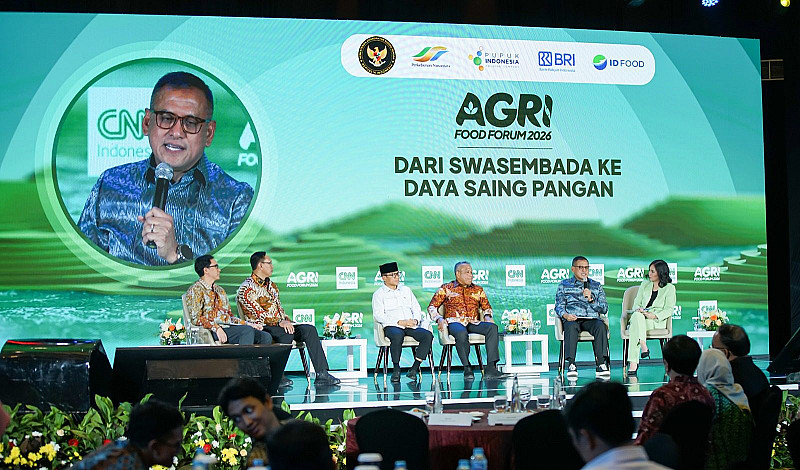
Jakarta, October 20, 2026 – The first two years of President Prabowo Subianto’s administration have marked a period of significant reform in Indonesia’s subsidized fertilizer governance. Through regulatory simplification, a 20 percent reduction in the Highest Retail Price (HET) of subsidized fertilizers, and increased fertilizer allocations, the Government has strengthened the foundations of agricultural productivity in pursuit of sustainable national food self-sufficiency.
This was conveyed by President Director of PT Pupuk Indonesia (Persero), Rahmad Pribadi, during the Agrifood Forum 2026, themed “Protein Self-Sufficiency and Global Food Opportunities,” on Monday (October 19, 2026). Rahmad also expressed his appreciation for the commitment demonstrated by the Prabowo-Gibran administration, describing these policies as tangible measures to prioritize farmers’ interests.
“From his very first day in office, the President has demonstrated his commitment to strengthening national food security. The focus is clear: increasing production, with one of the key priorities being to ensure that fertilizers are available in sufficient quantities and at increasingly affordable prices,” Rahmad said.
He explained that fertilizers play a strategic role as one of the key factors in improving agricultural productivity. When fertilizer requirements are adequately met, farmers are better equipped to increase crop yields and strengthen national food production.
“Fertilizer is like a weapon that does not need to be fired or detonated, yet it can have an enormous impact. This is because fertilizer is an upstream input directly linked to productivity,” he explained.
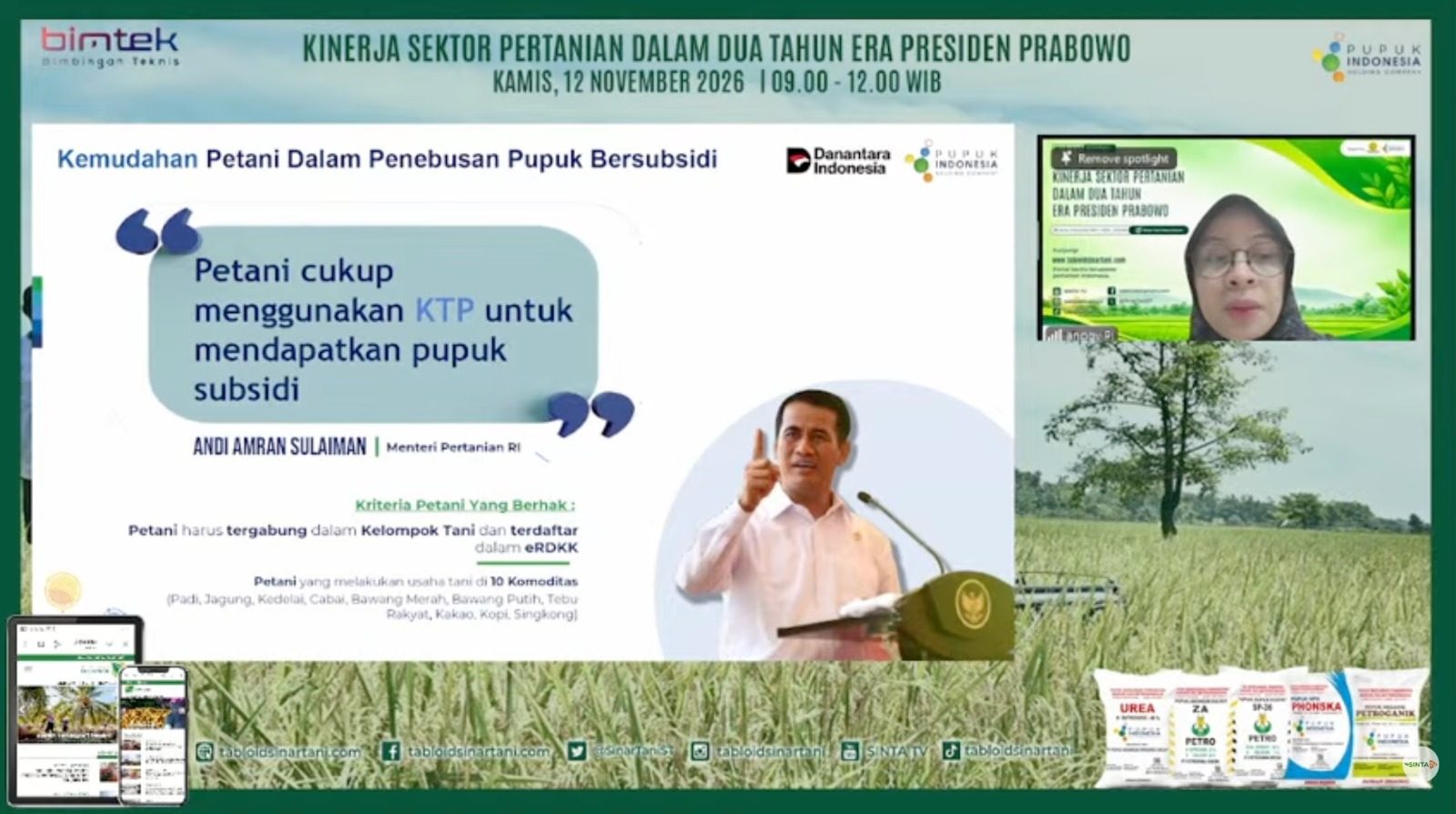
To support higher agricultural productivity, the Government introduced reforms to subsidized fertilizer governance through Presidential Regulation No. 6 of 2025 concerning Subsidized Fertilizer Governance. The regulation streamlined fertilizer distribution procedures by eliminating 145 regulatory provisions that had previously complicated the system.
Rahmad illustrated how, before these reforms, reallocating fertilizer from villages with surplus stocks to those experiencing shortages required multiple layers of bureaucratic approval. The approval process, extending from district authorities to the ministerial level, could take considerable time, sometimes resulting in fertilizer arriving only after the harvest season had ended.
“Today, the process has become much simpler, allowing fertilizers to be distributed more easily to farmers who need them. This is an important reform because fertilizers must be available precisely when farmers need them,” Rahmad said.
In addition to simplifying regulations, the Government increased the national subsidized fertilizer allocation to 9.8 million tons. The increased allocation strengthens efforts to meet the fertilizer requirements of eligible farmers.
The Government’s commitment to supporting farmers is also reflected in Presidential Regulation No. 113 of 2025, which enables Pupuk Indonesia to operate more efficiently. The resulting efficiency savings have been passed on to farmers through a 20 percent reduction in subsidized fertilizer prices.
Rahmad described the price reduction as a historic development for Indonesian farmers. Drawing on his personal experience, he said the policy represents an important milestone in the Government’s efforts to improve the affordability of agricultural inputs.
“As far as I know, coming from a family of farmers, I have never seen fertilizer prices go down in my lifetime. This is the first time I have witnessed such a reduction, demonstrating President Prabowo’s extraordinary commitment to supporting farmers,” he said.
According to Rahmad, subsidized fertilizers are more than agricultural inputs; they also represent the Government’s commitment to providing assistance to farmers who need it. Therefore, their distribution must be fair, accurately targeted, and carried out in accordance with the eligibility requirements for subsidy recipients.
To ensure this, Pupuk Indonesia continues to strengthen distribution oversight through an integrated digital system. Through its Command Center, the company can monitor fertilizer movements throughout the supply chain, from transportation and loading and unloading activities to redemption by farmers.
This monitoring is supported by GPS technology, CCTV, video documentation, and real-time redemption records accompanied by photographs of recipients. The system enables fertilizer movements to be traced, making it easier to identify potential irregularities in distribution.
“If there are distributors or retailers engaging in misconduct, we can take immediate action. This digital system helps us monitor distribution transparently and ensure that fertilizers reach eligible farmers,” Rahmad emphasized.
He added that effective subsidized fertilizer governance depends on sound regulations, consistent implementation, and continuously updated beneficiary data. Pupuk Indonesia remains committed to fulfilling its role in ensuring that Government policies deliver tangible benefits to farmers.
Rahmad expressed optimism that improvements in fertilizer governance would continue to support increased national food production. With Government support, adequate fertilizer availability, and accurately targeted distribution, Indonesia is expected to maintain food self-sufficiency over the long term.
“We have already seen tangible evidence that food self-sufficiency has been achieved. With the Government’s commitment and cooperation among all stakeholders, God willing, we will be able to sustain this achievement,” Rahmad concluded.