Who Is Eligible to Receive Subsidized Fertilizer?
-
 Posted by
- Share


Who Is Eligible to Receive Subsidized Fertilizer?
Subsidized fertilizer is one of the government's initiatives to help farmers access fertilizer at more affordable prices. The program aims to reduce agricultural production costs, improve productivity, and support national food security.
However, subsidized fertilizer is not available to all farmers. The government has established specific eligibility requirements to ensure that distribution is properly targeted and aligned with farming needs.
So, who is eligible to receive subsidized fertilizer? What requirements must be met, and how can farmers check whether they are registered as beneficiaries? Find out more in the following explanation.
Who Is Eligible to Receive Subsidized Fertilizer?
Subsidized fertilizer is allocated to two groups of beneficiaries: farmers in the agricultural sector and fish farmers in the fisheries sector. Each group has different eligibility requirements and registration procedures.
1. Eligibility Requirements for Subsidized Fertilizer in the Agricultural Sector
Subsidized fertilizer in the agricultural sector is intended for farmers who meet the requirements established by the government. One of the main criteria is that farmers must cultivate agricultural land of no more than 2 hectares.
In addition, farmers must meet several other requirements to qualify as beneficiaries of subsidized fertilizer, including:
Conducting farming activities in the food crop, horticulture, and/or plantation subsectors.
Cultivating agricultural commodities included in the list of eligible subsidized fertilizer recipients.
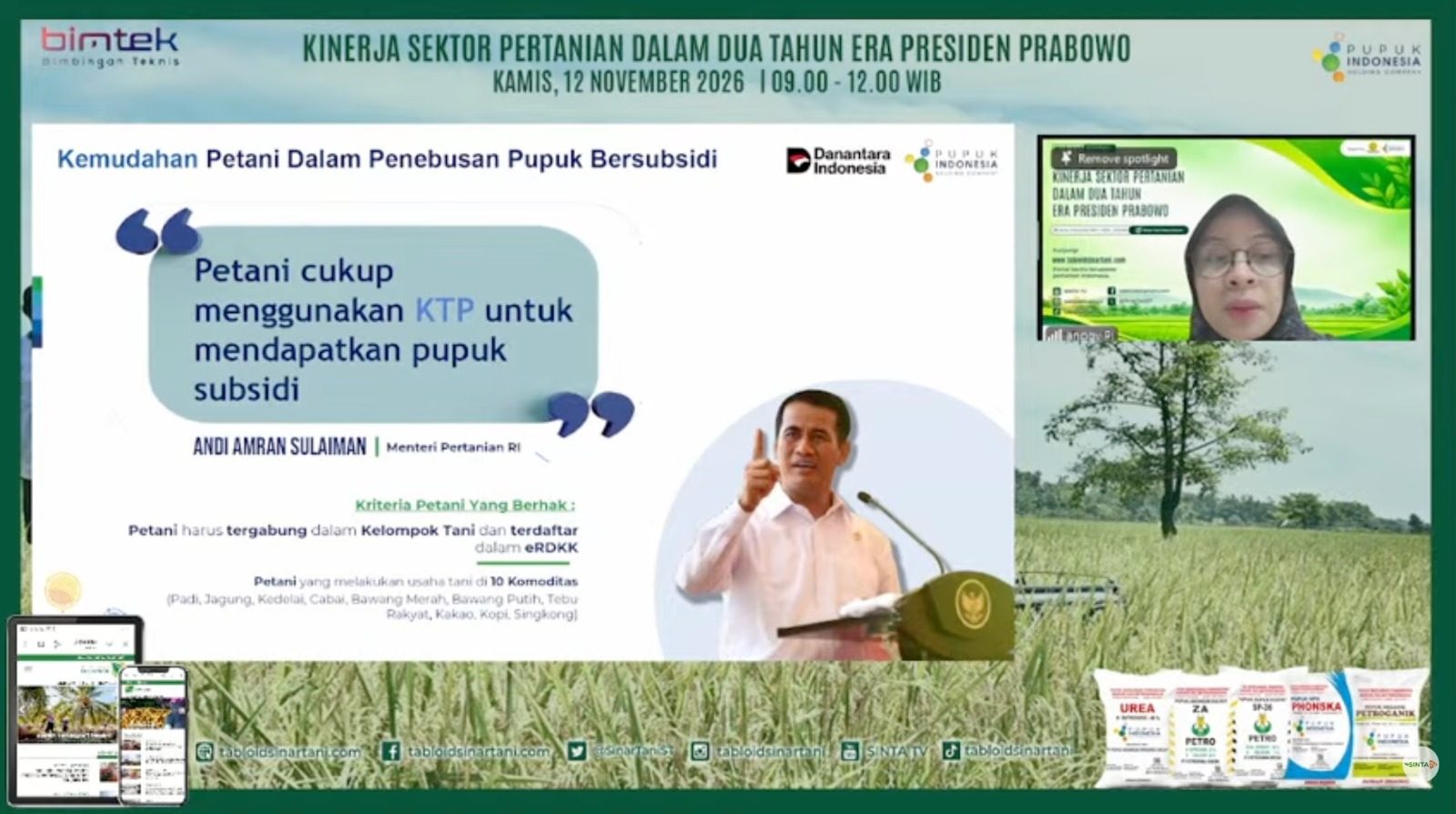
Being a member of a farmer group.
Being registered in the Agricultural Extension Management Information System (SIMLUHTAN).
Being registered in the electronic Group Definitive Needs Plan (e-RDKK) system.
Farmers who are members of Forest Village Community Institutions (LMDH) or other institutions that meet the criteria under applicable laws and regulations may also qualify as beneficiaries.
Farmers who meet these requirements may be proposed as subsidized fertilizer recipients. Their data and fertilizer requirements will then undergo registration and verification processes before being included in the government's official allocation.
2. Eligibility Requirements for Subsidized Fertilizer in the Fisheries Sector
In addition to the agricultural sector, the government also allocates subsidized fertilizer to fish farmers. This program is intended to support fish hatchery and grow-out activities that meet the government's eligibility criteria.
Fish farmers who wish to receive subsidized fertilizer must fulfill several requirements, including:
Conducting fish hatchery and/or grow-out activities using simple cultivation technology.
Being a member of a Fish Farmers Group (Pokdakan) that is legally incorporated or officially registered with the local fisheries agency.
Being registered in the electronic Fertilizer Subsidy Provision and Distribution Plan (e-RPSP) system managed by the Ministry of Marine Affairs and Fisheries (KKP).
Being registered in the marine and fisheries data portal and holding an electronic Marine and Fisheries Business Actor Card (KUSUKA).
Conducting aquaculture activities in eligible locations, excluding marine waters, inland open waters, and rice-fish farming systems (minapadi).
In addition to these requirements, the government has established maximum land area limits based on the type of activity and aquaculture environment, as follows:
Freshwater Fish
Maximum hatchery area: 0.75 hectares.
Maximum grow-out area: 2 hectares.
Brackishwater Fish
Maximum hatchery area: 0.5 hectares.
Maximum grow-out area: 5 hectares.
Marine Fish
Maximum hatchery area: 0.5 hectares.
Maximum grow-out area: 2 hectares.
Certain individuals are also excluded from eligibility based on their official positions, including regional heads, village heads, civil servants, employees of state-owned and regionally owned enterprises (SOEs and ROEs), members of the Indonesian National Armed Forces (TNI), members of the Indonesian National Police (Polri), and members of legislative bodies.
Unlike farmers in the agricultural sector, fish farmers do not use the e-RDKK system. Registration of subsidized fertilizer beneficiaries in the fisheries sector is conducted through the e-RPSP system managed by the Ministry of Marine Affairs and Fisheries.
What Regulations Govern the Subsidized Fertilizer Program?
The subsidized fertilizer program is supported by a regulatory framework governing its management, procurement, distribution, and beneficiary eligibility.
Several regulations serve as the legal basis for implementing the subsidized fertilizer program, including:
Presidential Regulation No. 6 of 2025 on the Governance of Subsidized Fertilizer
This regulation establishes the framework for the governance of subsidized fertilizer procurement and distribution.
Presidential Regulation No. 113 of 2025
This regulation amends Presidential Regulation No. 6 of 2025.
Minister of Agriculture Regulation No. 15 of 2025
This regulation governs the implementation of subsidized fertilizer management, including beneficiary eligibility requirements and distribution mechanisms.
Minister of Agriculture Regulation No. 3 of 2026
This regulation amends certain provisions of Minister of Agriculture Regulation No. 15 of 2025.
These regulations serve as guidelines for the government in managing beneficiary eligibility and subsidized fertilizer distribution. With clear regulations in place, the program is expected to be implemented more transparently and reach its intended beneficiaries.
Which Agricultural Commodities Are Eligible for Subsidized Fertilizer?
Not all crops are eligible for subsidized fertilizer allocations. The government has designated 10 agricultural commodities as beneficiaries of subsidized fertilizer in the agricultural sector. These commodities are divided into three subsectors:
1. Food Crops
Rice
Corn
Soybeans
Cassava
2. Horticulture
Chili peppers
Shallots
Garlic
3. Plantations
Coffee
Cocoa
Sugarcane
The selection of these commodities takes into account their fertilizer requirements and strategic role in supporting Indonesia's agricultural sector. Therefore, farmers need to ensure that the crops they cultivate are included in the eligible commodity list so that their fertilizer requirements can be proposed through the applicable registration mechanism.
How Are Subsidized Fertilizer Beneficiaries Determined?
To receive subsidized fertilizer, farmers must go through a fertilizer needs registration process facilitated by their farmer groups.
At the initial stage, farmers submit information regarding their identity, land area and location, cultivated commodities, and fertilizer requirements. The farmer group then compiles the information with assistance from Agricultural Extension Officers (PPL).
The fertilizer requirements are subsequently entered into the e-RDKK system for further processing. The submitted data undergoes examination and verification in accordance with government regulations before being used as the basis for determining subsidized fertilizer allocations.
For the 2027 Fiscal Year e-RDKK registration, the Ministry of Agriculture is also strengthening its data validation process to ensure consistency between farmers' identities, land areas, locations, cultivated commodities, and fertilizer requirements.
The verification process also includes checks for potential duplicate records to prevent inaccuracies in beneficiary determination. In addition, data that has been approved by the Head of the Regional Agriculture Office can no longer be edited through the regular registration process.
Therefore, farmers need to ensure that all submitted information is accurate and reflects their actual farming conditions. Accurate data from the outset is an important factor in supporting a smooth beneficiary determination process.
How Can Farmers Check Whether They Are Registered as Subsidized Fertilizer Beneficiaries?
Farmers can check whether their names are listed as registered subsidized fertilizer beneficiaries. There are several ways to do this:
1. Contact the Farmer Group
Farmers can ask their farmer group leaders about their registration status. Through their farmer groups, they can also confirm whether their farming information and fertilizer requirements have been submitted through the e-RDKK system.
2. Coordinate with Agricultural Extension Officers (PPL)
PPL officers can provide information about the registration process, fertilizer requirements submission, and the status of subsidized fertilizer beneficiary proposals.
3. Use the Subsidized Fertilizer Verification Portal
The government also provides an online service for checking subsidized fertilizer beneficiary status through the Subsidized Fertilizer Verification Portal (Portal Cek Subsidi Pupuk). Farmers can access the service to search for beneficiary information based on their region and name, according to the available data.
If a farmer's name cannot be found or there are discrepancies in the registered information, they can contact their farmer group, PPL officer, or local agriculture office for further information about the data correction process.
Through accurate registration and compliance with the applicable requirements, subsidized fertilizer distribution is expected to become more effectively targeted, ensuring that its benefits reach the farmers who need it most.