Pupuk Indonesia Plans Ammonia Hub in Batam to Challenge Singapore’s Dominance
-
 Posted by User01
- Share


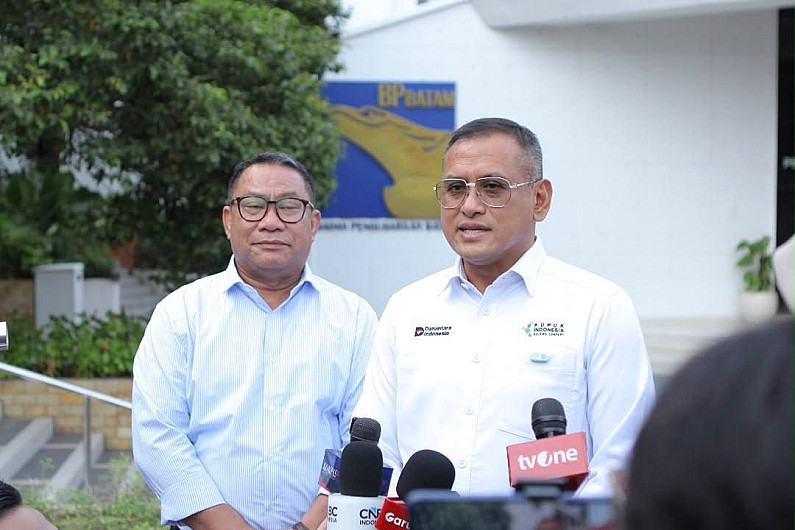
Batam, November 3, 2026 – PT Pupuk Indonesia (Persero) is exploring the development of an Ammonia Hub in Batam to create greater added value from natural gas through petrochemical processing and downstream industrial development. The initiative would utilize natural gas supplies from Natuna and Grissik, particularly if the existing gas supply contracts between Indonesia and Singapore expire in 2028. This initiative aligns with President Prabowo Subianto’s policy direction to optimize the management of Indonesia’s natural resources and maximize their benefits for the national economy.
The initiative began with a consultation meeting with the Batam Indonesia Free Zone Authority (BP Batam) on Monday (November 2) at BP Batam’s office in Batam, Riau Islands. The meeting was attended by President Director of PT Pupuk Indonesia, Rahmad Pribadi, and his management team, as well as Head of BP Batam, Amsakar Achmad, and his officials.
Rahmad Pribadi said that through this initiative, Pupuk Indonesia is not only supporting the Government’s policy direction but also taking an active role in translating it into industrial development capable of utilizing and processing natural resources domestically.
“President Prabowo has emphasized that natural resources are our lifeblood and should be utilized to develop the national economy. Minister of Energy and Mineral Resources Bahlil Lahadalia has also stated that natural gas and other resources should be prioritized for domestic use. Pupuk Indonesia is a company that relies heavily on natural gas as a raw material, particularly for producing ammonia on a very large scale,” Rahmad explained.
According to Rahmad, the initiative also draws lessons from Singapore, which has successfully developed its oil refining and maritime services industries into major economic strengths over more than five decades. The country has emerged as the world’s largest bunkering hub, providing marine fuel to vessels traveling along international shipping routes.
However, as the global shipping industry shifts toward lower-carbon fuels, Indonesia has an opportunity to develop similar industrial capabilities by leveraging its natural gas resources to establish an ammonia hub and bunkering services that can support future marine fuel demand.
This opportunity is also driven by developments at the International Maritime Organization (IMO), particularly the IMO Net-Zero Framework, which encourages the development of low- and zero-emission alternative fuels, including ammonia, as potential future energy sources for the maritime industry.
For Indonesia, this development presents a strategic opportunity that requires early preparation. Pupuk Indonesia already possesses relevant industrial capabilities to play a significant role in this emerging sector. The company currently has an ammonia production capacity of approximately 7.1 million tons per year, positioning it among the major ammonia producers across the Middle East and North Africa (MENA) and Asia-Pacific regions.
Building on these capabilities, Pupuk Indonesia has initiated plans to develop an Ammonia Hub in Batam by optimizing the potential of natural gas resources from Natuna and Grissik. The project is expected to create opportunities for utilizing natural gas in downstream industrial development while establishing infrastructure to support ammonia production, storage, distribution, and trading for both domestic and international markets.
Rahmad emphasized that the initiative is not merely about controlling natural resources, but rather about developing industries that generate greater added value for Indonesia’s economy.
“Once again, what we are doing is a contribution to Indonesia. This is not resource nationalism, but resource industrialization, which means downstream industrial development. Why is this not resource nationalism? Because we are also open to collaborating with anyone. What we want is to ensure that the added value remains within Indonesia. So, once again, this is not resource nationalism; this is resource industrialization,” Rahmad concluded.
Meanwhile, Deputy for Investment at BP Batam, Fary Djemy Francis, expressed his support for Pupuk Indonesia’s initiative. He emphasized that BP Batam would facilitate the necessary licensing processes for the development of the Ammonia Hub in Batam. This commitment is also in line with President Prabowo’s vision of positioning Batam as a model for economic growth by maximizing its potential.
“We will also accelerate the subsequent processes, including licensing once an agreement has been reached, as well as the allocation of land when the project moves forward. Most importantly, once the project reaches the ready-to-invest stage, BP Batam will establish a joint team with Pupuk Indonesia to facilitate its implementation,” Fary Djemy said.
Several countries have already begun preparing the infrastructure and ecosystems needed to support ammonia as a marine fuel. In the Asia-Pacific region, Australia, Singapore, and South Korea are among the countries developing initiatives to advance technological readiness and ammonia bunkering facilities.